Salt Spring Island Archives

by Usha Rautenbach
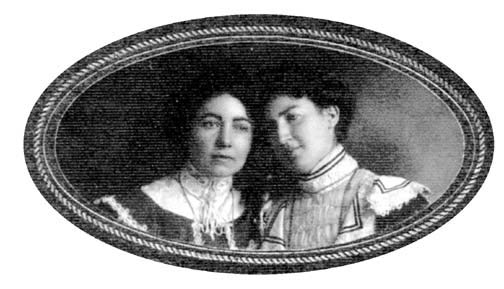
Kate & Annie Furness
circa 1900
George Furness was born in Hainford, Norfolk, England January 18, 1836. As a young man, he left home with his brother, John, to seek their fortunes in the gold fields in Australia. George left Australia and sailed to California then to Barkerville, BC. He then went to Vancouver Island. He married Kate Williams on September 27th, 1875 in Victoria.
I myself (for ESSSI) chose to feature Kate Furness as a representative teacher for the North End School; as a typical but above-average example.
You may have chosen her because here are extra bits of visual aid to go with the - things like her certificate(s?) or report of some kind?
And there are family photos, as well as the North End school photo with her in it.
Family descendants contacted the SSIA not that long ago and contributed what they had.
She fits Jean Barman’s description in her Mariah Mahoi book, of a person who didn’t change the world etc.
And definitely fits a standard norm of interest, as you say - that women were once simply not allowed to teach after marriage.
However, Katie Furness was clearly a teacher with a bit of a difference, and was even written about in her own time.
SSI Parish & Home Jan 1896
A very enjoyable Christmas tree entertainment was held at North End, Friday, December 20th. Nearly 100 were present, and the schoolroom crowded. Miss Furness has been a most successful teacher.
She also taught for many years longer than most young women (she was not alone in this: Salt Spring produced a number of young women who seemed to have enjoyed teaching). She taught in Salt Spring schools for 6 years, and when she left for Kamloops, it was to continue teaching.
And there is information to catch at the heart. Her father died
The Furness family came to Canada in 1875 and settled on a farm in the Burgoyne Valley (which was owned by a Mr. Williams on the 1875 map).
Kate (also referred to as Katie) went to the Burgoyne Bay School. She started early, for those days; the 1881 Census has her attending school, aged 5.
She was taught there by one of Salt Spring's long-lasting teachers, Mr. Cooke; he was one known to teach beyond Grade 8, is likely to have primed young Kate (or Katie) Furness to teach, as she began teaching at Beaver Point, taking over from two successive teachers (a sign that the Beaver Point Trustees found them wanting, or a sign that they, as was true of most rural schoolteachers, found themselves unfit for the task within a few months).
Kate Furness clearly had a vocation to be a teacher.
>From my notes:
"1892-1893
Beaver Point School teacher 1893-94 Kate Furness (had taught previous year)
a longish laster 1893-98 (6 yrs)
With Katie Furness now teaching at Beaver Point, Salt Spring enters an era of committed teachers in all four schools. Katie Furness was to teach for six years on Salt Spring before moving on to teach in the interior. Kate McKinnon was to commit to the North End having become the fourth teacher there in its first year of re-opening: she stayed for three years. Raffles Purdy was now half way through his eleven-year committment to the Central School. Mr.A.W.Cooke was in his third of thirty years teaching Salt Spring Island children."
In the school year 1896-97 she taught at the Vesuvius North schoolhouse (North End School, at Fernwood); this was Raffles Augustus Purdy's final full year of teaching at the Vesuvius schoolhouse (Central), having taught Salt Spring's North End students for 12 years; he continued to teach until the end of December 1897. A year later, at the end of December 1898, Miss Furness resigns, "owing to ill health. She will be very much missed." (Her father had died.)
She was teaching in the North End School at a time when Raffles Augustus Purdy was teaching at Central, and I think (which means I can't swear to it that I KNOW) that he saw a certain potential in her, and helped her to teach well. (He was another Salt Spring teacher known to teach beyond Grade 8.)
When Mr. Cooke finally moved on from Burgoyne Bay School, to save the Divide School from its not entirely satisfactory previous teachers, it was to Kate Furness that he handed the students over in 1899. Reverend Wilson reported (Salt Spring Parish & Home January 1900) that she had "obtained a teaching certificate" in the summer of 1899. She continued to teach at Burgoune Bay School until 1902.
Re teacher training -
Teacher Certification and Training
During the colonial period, school teachers were appointed by the Governor or by the General Board of Education (1865-1869). Although colonial teachers were not formally certified, candidates for teaching appointments were required to demonstrate their competency to the board or to the official responsible for the colony's common school.
Under the terms of the 1872 Public School Act, all teachers had to be certified by the Superintendent of Education. Candidates were required to write an examination set by the Board of Education or -- after 1880 -- the Provincial Board of Examiners. Different grades or classes of certificates were awarded, depending on the results of the candidate's exam. After 1876, provincial high school graduates qualified for teaching certificates in a similar manner, insofar as their certificates were awarded on the results of their terminal high school examinations.
Standards and levels of certification changed frequently, but generally four types of certificates were issued by the Department.
* Academic certificates were given to graduates of British Empire universities. These were permanent certificates and once granted did not have to be renewed.
* First Class certificates were granted to candidates who scored over 70 percent on the "Public School Teachers' Examinations." These were permanent certifications and once granted did not have to be renewed.
* Second Class certificates were awarded to candidates scoring over 50 percent on the exams; 2nd class certificates were valid for three (3) years.
* Third Class certificates were issued to those who scored above 30 percent; 3rd class certificates were valid for one (1) year, but were renewable.
On occasion, the Superintendent of Education also issued Temporary Certificates which were valid until the annual teachers' exams were held in July.
In 1901, the province's first Normal School for teacher training was opened in Vancouver. (A second Normal School in Victoria was opened in 1915.) Subsequently, graduation from Normal School replaced the "Public School Teachers' Examinations" for those seeking First and Second Class certificates. Only Third Class certificates were issued on the basis of candidates' high school exams, and even these were phased out by 1921. Teachers could up-grade their qualifications by taking courses at the Summer School for Teachers, held annually in Victoria from 1914 to 1956.
There seems to have been something called a Teachers' Institute in Victoria in 1896.
There is a Rev. E.F. Wilson quote:
From my ESSSI Notes:
1885 Burgoyne Bay Honour Rolls
Annie Furness Deportment
1892-1893
A hard winter. Sara Beddis got sick and died.
HGIS 2
Vesuvius North School teacher 1892-93 Kate McKinnon (1892, 1892-3, 1893-4)
HGIS 2
Vesuvius (Central) School teacher 1892-93 Raffles Purdy
HGIS 6
Beaver Point School teacher 1892-93 R.Watkin (htpy) then Kate Furness
Alex McLennan Deportment
Adolphus Trage Punctuality
Ella Ruckle Proficiency
HGIS 3
Burgoyne Bay School teacher 1892-93 A.W. Cooke (a long laster 1891-99)
SESS 60
Vesuvius (Central) school, 22 students
“Mr. Purdy was the teacher, but no doubt occupied in taking the picture.”
Bean Cecelia, Michael
Berrow Alex, Leland, Archie, Sidney
Bittancourt Rose, Nellie
Fisher Frank
Jenkins Eva (1888 pre-emption of Divide site)
Morris Annie
Mouat Margaret, William, Mary, Gilbert
Norton Dorothy, Frances, Albert, Elsie, Walter
Waklim Howard
Wilson Norman
HGIS 10
1893 Pender School 8 pupils
Washington Grimmer, James Auchterlonie, Andrew Davidson applied to Victoria for a school which started in 1893. It was not formally opened until August 1896. Taecher Miss Dalby. Trustees W.Grimmer, E.Hoosan, R.Hope.
Mr. A.W. Cooke
- a Long Lasting Salt Spring Island Teacher
Mr.A.W.Cooke started teaching on Salt Spring Island at the Burgoyne Bay School in the school year of 1890-1891. He devoted eight years to Burgoyne Bay before moving on to serve the Divide for seven years before giving his final twelve years of teaching to Isabella Point School! He seems to have taken one year off (1913-14) in the thirty years given to the education of Salt Spring youth, 1890-1920.
Gulf Island Patchwork p.94 refers to a tutor, Alfred Cook, who accompanied Canon Paddon and his wife and his family of nine, 7 sons and 2 daughters, to Victoria in 1889. More Tales from the Outer Gulf Islands p.157 tells of Canon Paddon’s earlier life, born and educated in England, his marriage to a girl in County Galway, Ireland: in Tuam Cathedral he was made Canon of Kilmain, County Mayo, Ireland, from whence he emigrated with wife, large family, and tutor. The youngest child was born in Victoria - the children went to school in Victoria...
Alfred W. Cooke the long-term Salt Spring Island teacher, born in Ireland, possibly into an English family, may have been a long-time tutor to the Paddon children: he was 32 years old when he emigrated to Canada with the Paddon family. Aged 33 when he started teaching in the 1890-91 school year at Burgoyne Bay school, he was 63 when he finally retired from teaching at Isabella Point School.
Tom Koppel quotes “one of many apocryphal tales in Bea Hamilton’s history of Salt Spring”: Kea, a timid Kanaka who hid every time a white schoolteacher named Cooke came around. Kea assumed that Cooke was a descendant of the great explorer, who was killed . Once, inadvertently finding himself face to face with the teacher, “the Kanaka shrank back jabbering, ‘No-no-no be angry - I no kill you grandfather and no eat him!’” Tom Koppel, Kanaka, (Vancouver: Whitecap, 1995) p.28: Beatrice Hamilton, Salt Spring Island, (Vancouver: Mitchell, 1969) p.82
SSI P&H Feb 1896 (Rev. Wilson’s monthly parish magazine)
Mr. A.W.Cooke gave his annual Christmas entertainment at the Burgoyne Bay school house on the 17th ult. The room was crowded and all enjoyed themselves greatly.
Mr. Cooke served as the organist when church services were held in the schools he taught in. He seems to have been a teacher of music - the schools he taught in held an annual Christmas Tree Entertainment “and concert”. 1896 November 8. Wilson Diary, referring to himself as Father: “Father found the Fulford church in disorder, black lamp chimneys, comic songs and some glasses on the seats, bibles and prayer books thrown in the corner. He found that it was Mr. Cooke’s doing, that they had been using the church as a concert hall the night before. Only eleven people were at church (had too good a time!) Father spoke strongly about it and turned all the comic songs and music out onto the porch, which made Cooke angry.”
• The 1891 Census lists A.W. Cooke, aged 34, lodging at Joe Nightingale’s farmhouse, as English, C of E, and a teacher.
• In the Rev. Wilson’s Parish and Home magazine A.W.Cooke is recorded in 1897 as organist at St. Mary’s Church in the Burgoyne Valley.
• The Census of 1901 tells us he is now 43 years old, a bachelor teacher lodging at Conery’s farm (on what is now Blackburn Road, near the Divide School, where he was teaching in 1901). He is recorded as Alfred Cook (sic), C of E, born in Ireland, June 7, 1857, who came to Canada in 1890.
• SESS 1895 A.W.Cooke is a visitor at Stevens Boarding House, where Raffles Purdy lived, so they seem to have known each other as fellow teachers, both bachelors at the time.
__________________________
1896
Snapshots of Early Salt Spring 64
Miss Katie Furness, teacher at Vesuvius North (Fernwood) school, with 27 students
Booth George (I note 2 George, 2 Ed, 3 Mary, 3 Bill !)
Cotsford Ed
McAffee Ed, name unknown
McFadden Carrie, Mary
Maddon Bill
Richards Wilkie, Mary, Jim
Richard Bill
Robertson Mary
Rule Mary, Amy, Annie
Sampson Martha, Charlie, Matilda, Chester, May
Spence Bill
Whims George, Wick, Jane, Jack
A bit of CONTEXT for this Photograph:
FSFI 71
In 1896 a certain Principal Northeby gave a talk at the Teachers’ Institute in Victoria. He stated “Corporal punishment must only be inflicted in the schools as a last resort, as with the great majority of children kindness and firmness should prevail, without resort to force.”
“Although some backwoods teachers disciplined too harshly, there were also very young teachers with absolutely no training, who could not bring themselves to strap at all, and who could not keep order.”
“We were all jammed in one little room with one little girl trying to act as a teacher. It was an entirely hopeless embraglio. We plunged in and, to put it frankly, learned nothing. The hubbub, the medley, the whole situation was entirely anti-education.”
FSFI 72
Children who attended one-room schools were not often really hostile or resentful. Misbehaviour usually took the form of practical jokes or pranks, and how the teacher reacted was the thing.
FSFI 73
In many ways country schoolteachers probably had an easier time with discipline than did city teachers. Rural children did not usually feel such a separation between themselves and adults. They had a share in as much of the work as was possible and uderstood its necessity. They also shared in the play, going to dances, picnics, ball games, and to town with their parents. t school they helped the teacher by bringing in wood and water, and cleaning the building. Sometimes the older pupils acted as teachers for the younger ones when the teacher was busy. The sense of belonging that resulted meant that most children were not resentful of adults.

